

Jim Hartung
Systems Engineering Executive | Public Policy Innovator | Author
Summary: Systems engineering executive with 40 years of leadership experience in nationally significant aerospace and energy programs, including the International Space Station power system, and 16 years of experience (part-time) applying systems engineering principles to public policy design.
Core Expertise:
- Systems engineering and integration | Large-scale program leadership
- Aerospace and energy systems | Nuclear systems and risk analysis
- Public policy design and optimization | Six-step model
- Systems engineering processes to address societal challenges
- Tax reform | Healthcare reform | Climate Policy | Education policy
Professional Experience:
Rocketdyne (1985 - 2010)
Director, SE&I, ISS power system (1985 - 1996)
- Led systems engineering and integration (SE&I) for the ISS electric power system from concept selection through early flight hardware and software development.
- Oversaw development activities involving flight hardware, software, and approximately 1,000 personnel as Deputy Program Manager.
Director, Satellite Power Systems (1996 - 1999)
- Led development of the electric power system for the Teledesic constellation of 800+ satellites.
- Advanced the state of the art in satellite solar arrays and batteries, technologies later critical to large-scale satellite constellations.
Director, Energy Systems (2000 - 2010)
- Led development of advanced energy systems leveraging Rocketdyne’s rocket engine technologies, including zero-emission power concepts and industrial applications.
US Navy, Atomics International, and General Atomics (1970 - 1985)
- Supported the design and operation of naval nuclear power plants for submarines and aircraft carriers, as an engineering officer under Admiral Rickover.
- Developed an approach for using nuclear plant operating data and quantitative risk assessment to inform advanced reactor design.
- Used systems engineering to identify why the output of a nuclear weapons production facility declined after the workforce doubled from 3,000 to 6,000 personnel. (This contributed to a major change in nuclear weapons production.)
Independent Public Policy Research | Part-Time While Retired (2010 - 2026)
Pioneered the use of systems engineering principles to develop solutions to complex social, economic, environmental, and political problems. Key accomplishments are:
- Created a six-step systems engineering model and a “system of systems” matrix approach for public policy design.
- Identified ten systems engineering strategies adaptable to public policy optimization.
- Developed a comprehensive, nonpartisan proposal for tax and healthcare reform.
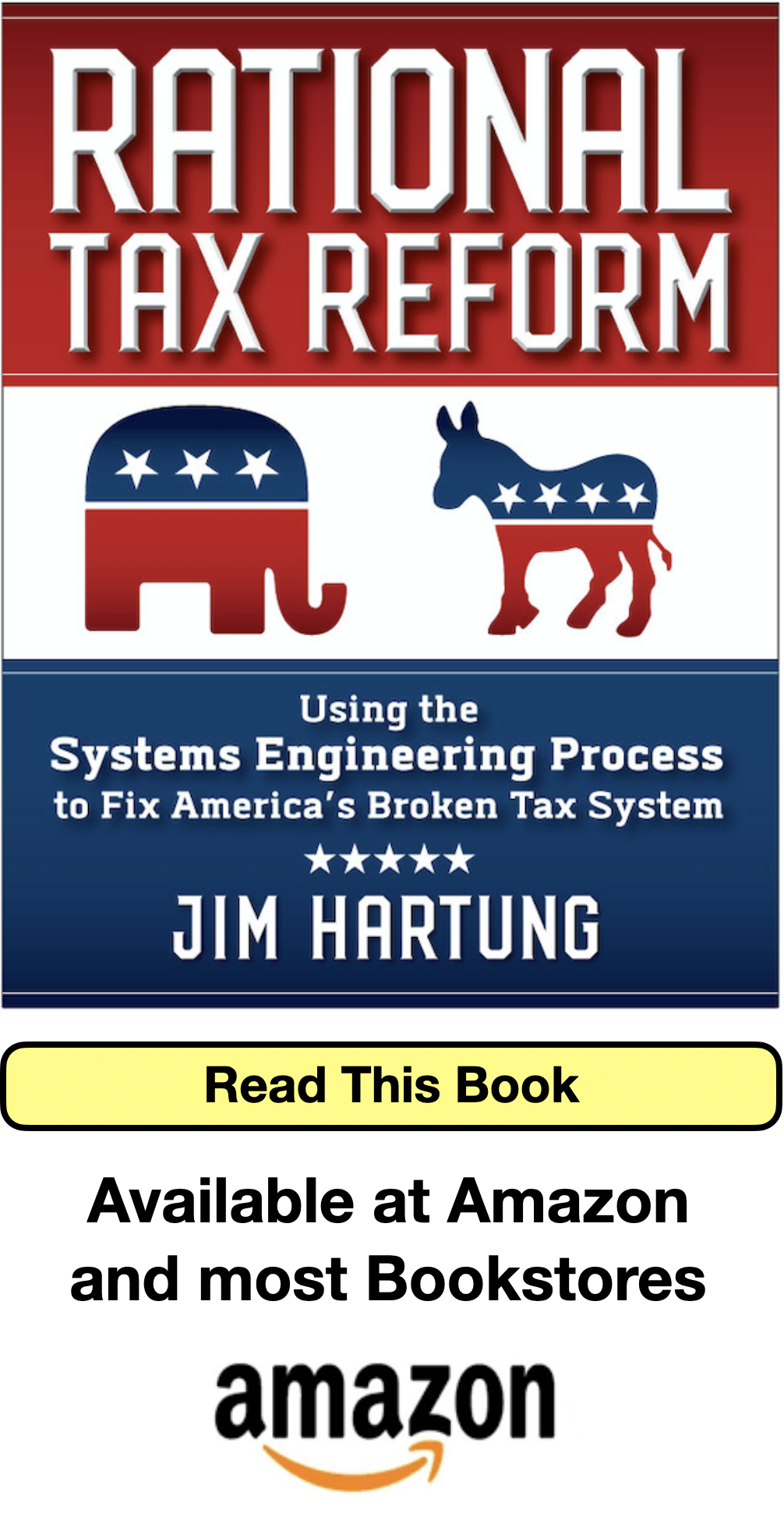
- Published Rational Tax Reform, describing the proposed tax and healthcare reform and the supporting systems engineering methodology.
- Developed ten large-scale policy proposals addressing major national challenges, including taxation, healthcare, immigration, education, climate change, the justice system, governance, and international relations.
- Engaged policymakers through advocacy, policy outreach, and op-eds on climate policy.
Selected Publications:
- Rational Tax Reform: Using the Systems Engineering Process to Fix America’s Broken Tax System (book)
- Bridge the Partisan Divide and Develop Effective Policies with Systems Engineering (article published in INSIGHT, the monthly magazine of the International Council on Systems Engineering)
- How to Limit Global Warming to Less than 1.5 Degrees Celsius (op-ed published in The Hill)
- Ten Moonshots (describes ten large-scale policy proposals and how systems engineering principles informed their development)
- Lessons Learned from Major Core Damage Accidents (paper presented at American Nuclear Society annual meeting, received a “Best Paper” award)
- JimHartung.com (website describing how I use systems engineering principles develop and optimize public policies)
Education:
- BS, Physics, University of Minnesota, 1969
- Navy Nuclear Engineering School, 1971
- MS, Engineering Management, UCLA, 1985